Understanding the Food Pyramid:A Guide to Balanced Nutrition for Children
Introduction
In the quest for raising healthy children, understanding the basics of nutrition is crucial. The food pyramid, a visual representation of a balanced diet, has long been a staple in nutrition education. However, with the evolution of dietary guidelines, the traditional pyramid has been updated and is now known as MyPlate in the United States. For those seeking an international perspective or for those who prefer the traditional pyramid model, the food pyramid remains a valuable tool. This article will provide an overview of the food pyramid in English, focusing on its components and how it can be applied to ensure children receive a well-rounded diet.
The Food Pyramid: A Visual Guide to Balanced Nutrition
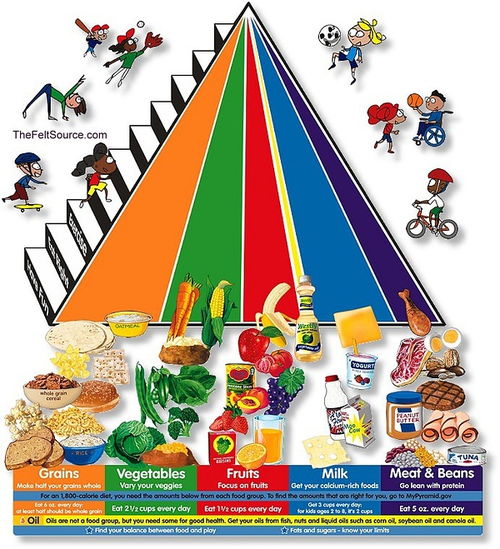
The food pyramid is a simple yet effective tool that categorizes food into different groups based on their nutritional value and recommends the proportion of each group that should be consumed daily. It is designed to help individuals, including children, understand the variety and balance needed in their diet.
1、Grains
The base of the pyramid represents grains, which should form the largest portion of our daily diet. Grains are rich in carbohydrates, fiber, and B vitamins. They provide energy and are essential for maintaining a healthy digestive system. For children, whole grains are particularly important as they offer more nutrients and fiber compared to refined grains. Examples of whole grains include brown rice, whole wheat bread, and oats.
2、Fruits and Vegetables
The second level of the pyramid consists of fruits and vegetables, which are vital for providing vitamins, minerals, and antioxidants. Children should be encouraged to consume a variety of colorful fruits and vegetables to ensure they get a wide range of nutrients. Aim for at least five servings of fruits and vegetables per day, with an emphasis on fresh, frozen, or minimally processed options.
3、Protein
The third level of the pyramid includes protein-rich foods such as lean meats, poultry, fish, beans, nuts, and seeds. Protein is crucial for growth and development in children, as it helps build and repair tissues. It is important to choose lean protein sources to minimize the intake of saturated fats and cholesterol. Plant-based proteins like beans and lentils are also excellent options for a balanced diet.
4、Dairy
The fourth level of the pyramid represents dairy products, which are a good source of calcium, vitamin D, and protein. Dairy products help build strong bones and teeth in children. It is recommended that children consume at least two to three servings of low-fat or fat-free dairy products daily. This can include milk, yogurt, and cheese.
5、Fats and Sweets
The tip of the pyramid, which is the smallest part, represents fats and sweets. These should be consumed sparingly as they are high in calories and low in nutrients. Fats can be divided into healthy fats (like those found in nuts, seeds, and fish) and unhealthy fats (like those in fried foods and processed snacks). Sweets, such as candy and sugary drinks, should be limited due to their high sugar content, which can lead to dental problems and weight gain.
Applying the Food Pyramid to Children's Diets
1、Encourage Variety
A key principle of the food pyramid is variety. Encourage children to try different foods from each group to ensure they get a wide range of nutrients. This can be done by offering a colorful plate at meal times, with each color representing a different food group.
2、Portion Control
Teaching children about portion sizes is essential. Using the food pyramid as a guide, explain that larger portions should come from grains, fruits, and vegetables, while smaller portions should be reserved for protein, dairy, and fats and sweets.
3、Healthy Snacking
Snacks can be a great way to incorporate more fruits, vegetables, and whole grains into a child's diet. Opt for healthy snacks like fruit, yogurt, or whole-grain crackers to keep energy levels up between meals.
4、Limit Processed Foods
Processed foods often contain high levels of salt, sugar, and unhealthy fats. Encourage children to eat more whole foods and limit their intake of processed snacks and meals.
5、Family Meals
Eating meals together as a family can help children learn about healthy eating habits and develop a positive relationship with food. Use this time to discuss the different food groups and why they are important.
Conclusion
The food pyramid is a valuable resource for understanding and implementing a balanced diet for children. By focusing on variety, portion control, healthy snacking, limiting processed foods, and encouraging family meals, parents and caregivers can help children develop lifelong healthy eating habits. Remember, the food pyramid is a guide, and individual needs may vary. It's always a good idea to consult with a healthcare provider or registered dietitian for personalized nutrition advice.
Java接口详解:从RemoteControl到OrderService,轻松掌握接口设计与实现
CDR是什么软件?CorelDRAW矢量设计软件详解与实用指南
下午好英文怎么说?掌握Good afternoon地道用法,告别发音尴尬与场合误用
锻炼的英文怎么说?掌握exercise、workout、training的区别,让英语表达更地道
Bootstrap框架全解析:从开源起源到移动优先设计,助你高效构建响应式网站
薯条的英文怎么说?French fries发音与文化全解析,轻松掌握地道表达
Java多线程编程实战指南:从基础Runnable到高级CompletableFuture与锁机制详解
游戏开发培训:零基础快速入行,轻松掌握Unity/Unreal,开启高薪游戏开发职业生涯